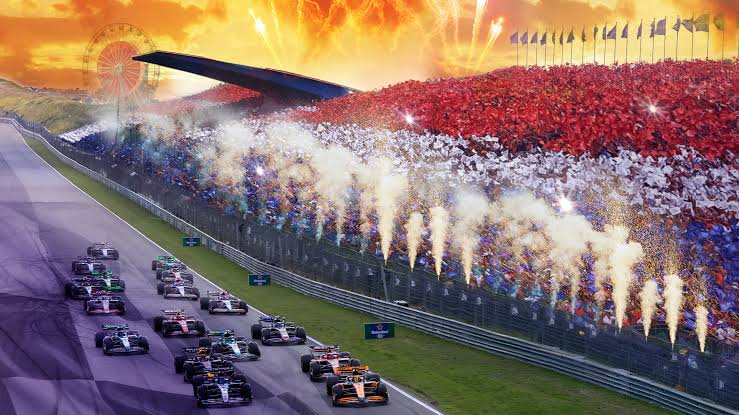
Formula 1 returns from its summer break at Zandvoort on 21 to 23 August, with more riding on the weekend than the result of a single race. The 2026 Dutch Grand Prix is the final event in the circuit’s current Formula 1 agreement, and the first Dutch round to use the Sprint format. That leaves teams with only one practice session before competitive running begins.
The championship picture also looks very different from the one many expected at the start of the new technical era. Kimi Antonelli arrives as the drivers’ championship leader, while Lewis Hamilton and George Russell are his closest challengers. Lando Norris gave McLaren fresh hope by winning in Hungary, and Max Verstappen heads home after taking second place at the Hungaroring.
Max Verstappen faces a different Dutch Grand Prix challenge
Zandvoort has been closely tied to Verstappen since the Dutch Grand Prix returned to Formula 1 in 2021. He won the first three races after the comeback, but he starts the 2026 weekend sixth in the championship on 109 points. That places him 110 points behind Antonelli and 19 behind Norris.
Red Bull therefore has more immediate goals than a late title calculation. The team needs to establish whether its Hungary result reflected genuine progress and whether the car can stay close to the leading pace through Zandvoort’s fast changes of direction. Verstappen finished second in Budapest, while team-mate Isack Hadjar took sixth, giving Red Bull a useful result before the break.
Home support will make Verstappen the centre of attention, but his record alone cannot settle the competitive order. The 2026 cars place different demands on drivers and teams, and Zandvoort gives them little room to hide weakness. A small qualifying error can be costly because overtaking is difficult and the gravel sits close to the racing line.
Dutch Grand Prix championship picture before Zandvoort
Verstappen’s home record will keep him at the centre of the Dutch Grand Prix build-up, including coverage from a new betting site, but recent form points to a wider group of possible winners. Antonelli leads the standings with 219 points, Hamilton has 169 and Russell has 160. Norris is fifth on 128 points after winning the final race before the summer break.
Those figures give the leading drivers plenty to race for at Zandvoort. The circuit is hosting a Sprint for the first time, so teams have only Friday’s opening practice session to settle their set-up before the cars enter competitive conditions. A poor start could affect both Saturday’s Sprint and qualifying for Sunday’s Grand Prix, leaving little time to recover between sessions.
Qualifying should carry weight because overtaking is difficult on Zandvoort’s narrow layout. The changing coastal weather can also alter tyre choices and race strategy with little warning. Teams that adapt quickly to shifts in wind or rain may gain ground, while small errors could have consequences across the entire weekend.
Kimi Antonelli leads the 2026 F1 title race into Zandvoort
Antonelli’s position at the top is one of the season’s biggest developments. The Mercedes driver has a 50-point advantage over Hamilton and a 59-point lead over team-mate Russell. His third place in Hungary added another solid result, even though Norris and Verstappen finished ahead of him.
Mercedes leads both sides of its internal championship contest, which makes the team’s approach worth watching. Antonelli has built a clear points cushion, but Russell remains within range of second place and cannot simply be treated as a supporting driver. The Sprint adds another scoring opportunity and increases the value of a clean weekend for both.
Zandvoort should also test Antonelli in a way that the standings cannot measure. Its narrow layout, banking and short lap can compress the field in qualifying. The championship leader will need to balance aggression with the need to protect his advantage across two starts and two races.
McLaren arrives with renewed pace after the Hungarian Grand Prix
Norris’s victory at the Hungaroring gave McLaren its first win of the 2026 season. He started from pole, recovered after losing the lead to Oscar Piastri and used clear air before his second stop to move ahead. Piastri later retired with an apparent gearbox problem after earlier contact with Carlos Sainz.
The result raised an obvious question for Zandvoort: has McLaren found a set-up and development direction that can work at more than one circuit? Hungary and Zandvoort both reward strong performance through medium-speed and high-speed corners, but the Dutch track adds banking, elevation changes and exposure to coastal wind. McLaren still needs to prove that its Budapest pace is transferable.
Norris also has a personal reason to want a clean weekend. He is 91 points behind Antonelli, so a title recovery remains difficult, but another strong result would move him closer to Russell, Hamilton and Leclerc. Piastri, seventh in the standings on 92 points, needs reliability and a steady response after his Hungary retirement.
Ferrari needs to turn qualifying speed into a Dutch GP result
Ferrari showed pace in Hungary, where Hamilton started alongside pole-sitter Norris and Leclerc remained in the leading fight. The race produced fourth and fifth places after Hamilton received a five-second penalty for speeding in the pit lane. It was a respectable points return, but not the conversion the team wanted from its qualifying position.
Hamilton is second in the championship, 50 points behind Antonelli, while Leclerc sits fourth on 138 points. Ferrari cannot afford a weekend shaped by small operational errors. With a Sprint on the programme, there are more points available but less time to correct a difficult set-up.
The fight between Hamilton and the Mercedes drivers carries added interest for a UK audience. Hamilton’s move to Ferrari remains one of Formula 1’s major brand and sporting stories, while Russell and Antonelli have kept Mercedes at the front under the 2026 rules. Zandvoort could show whether Ferrari can turn single-lap pace into a sustained challenge across the full weekend.
The Zandvoort Sprint changes the usual race-weekend rhythm
Friday practice begins at 12:30 local time, followed by Sprint Qualifying at 16:30. The 24-lap Sprint is scheduled for noon on Saturday, with Grand Prix qualifying at 16:00. Sunday’s 72-lap race starts at 15:00 local time, which is 14:00 in the UK.
The compressed schedule places extra pressure on simulator work and the information gathered during the first hour on track. Teams must decide quickly how much downforce to carry, how to manage tyre temperatures and how their cars respond to the banked corners. Any driver who loses time through a mechanical problem in practice will enter Sprint Qualifying with limited preparation.
Saturday also becomes more demanding. The Sprint provides racing data, but an incident can leave mechanics with repair work before Grand Prix qualifying later the same day. Teams fighting for the championship may take a measured approach, while drivers chasing a breakthrough result have reason to attack.
Why qualifying remains central at Circuit Zandvoort
Circuit Zandvoort measures 4.259 kilometres and Sunday’s Grand Prix covers 72 laps. The layout runs through the dunes and includes heavily banked sections such as the final Arie Luyendijk corner. Tarzan at Turn 1 is the clearest conventional overtaking opportunity, but passing is generally harder here than at circuits with longer straights.
That puts more weight on track position and pit timing. A driver who qualifies behind a slightly slower car may spend much of the race in turbulent air, which can increase tyre wear and restrict strategic options. Safety Cars and Virtual Safety Cars can still change the order, as can rain drifting in from the North Sea.
Qualifying gaps are often tight because the lap is short. Traffic management matters in the opening session, and a mistake can leave a leading driver near the back before there is time to respond. The banked corners allow more than one approach, but confidence and car balance will decide whether those lines produce speed.
The final scheduled Dutch Grand Prix raises the stakes
Formula 1 and the Dutch Grand Prix promoter confirmed that the event will leave the calendar after 2026 under the current agreement. The modern Zandvoort run began in 2021 after a 36-year absence, and the promoter chose to finish after a one-year extension rather than continue beyond this season.
That gives the weekend a clear sense of occasion without changing the competitive priorities. Verstappen will want another home victory, Antonelli needs to protect his championship lead, and Mercedes, Ferrari, McLaren and Red Bull all have performance questions to answer after the break. The Sprint means those answers will begin arriving on Friday afternoon.
For viewers in the UK, the main sessions fall across Friday afternoon, Saturday morning and afternoon, and Sunday at 14:00 BST. Sky Sports F1 is the established live broadcaster, while Channel 4’s arrangements should be checked against its confirmed highlights schedule. With the title race, home pressure and Zandvoort’s farewell all converging on one weekend, the 2026 Dutch Grand Prix has substance behind the occasion.