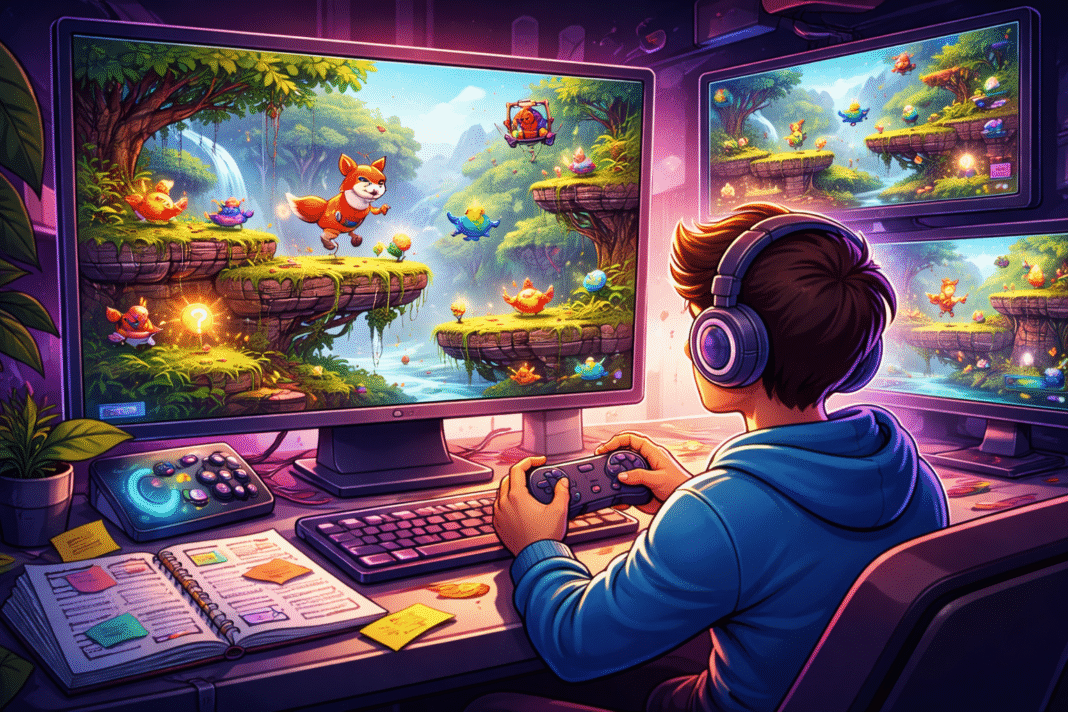
You type a simple description of your game idea into AI game maker software and hit generate, and get something that works but misses the mark. The character moves, obstacles appear, but controls feel off, visuals look plain, or the challenge is uneven. Players try it once and move on. This happens because basic descriptions leave too much open; the tool fills in gaps with safe defaults that rarely match your vision. Refining your description fixes this by adding clear, specific details about mechanics, look, feel, and flow. You describe one part at a time, generate a new version, play it, and adjust until it matches what you pictured. Refined descriptions turn rough drafts into polished games. Start broad, then layer in specifics like jump height, coin sparkle effects, or enemy patterns. Test on your phone for touch play. Most creators see huge improvements after 4-6 rounds of tweaks. This guide shows how to refine step by step, with examples for common game types like platformers, runners, or collectors. You will solve problems like boring repetition, clunky movement, or missing excitement, making games players finish and share.
Start with a Strong Core Idea Before Adding Details
Every good description begins with one clear main action and goal. Vague starts like making a fun jumper lead to messy results, the tool guesses and creates something average. Nail the core first: what does the player do most, and what do they achieve? For a platformer, say a fox jumps platforms to collect fish and reach the end flag. Keep it to 1-2 sentences. Build from there: add controls next, like tap screen or press space to jump. State the win: collect all fish or survive 60 seconds. This foundation guides everything else. Weak cores make later details clash; strong ones make refinements easy. Test your core by generating just that. Play for 5 minutes, does it feel focused and fun? If scattered, rewrite shorter and clearer. A solid base prevents frustration later.
Specify Controls and Mechanics Precisely
Controls make or break play. Generic requests like make it playable create delays or sticky movement. Describe inputs exactly for instant response. Tap the screen’s bottom half to move left/right, top half to jump high enough for platforms.
- Add momentum: jumps carry forward glide, landing has a small bounce.
- For shooters: swipe to aim, tap to fire with 0.3 second cooldown.
- Include device support: works smoothly on phone taps and keyboard arrows.
- Mechanics follow: platforms 100 units apart early, narrow to 60 later. Enemies patrol 200 units, chase on sight. Coins respawn every 10 seconds.
- Refine by playing: if jumps clip, add variable height based on tap length. Generate, test responsiveness. Precise specs create a fluid feel.
Describe Visuals and Audio for Immersive Appeal
- Plain looks boring fast. Refine by painting the scene: a colorful cartoon fox with a fluffy tail, a forest background with swaying trees, and a sunny sky.
- Layer details: platforms, mossy wood, coins, golden sparkle trail. Enemies cartoon birds flapping wings.
- Audio brings life: upbeat forest tune loops calm, speeds on danger. Jump whoosh, coin ding, enemy chirp.
- Refine iteratively: first visuals only, generate, check appeal. Add audio next. Play muted vs full, does sound elevate excitement? Vivid senses make games stick.
Add Feedback and Polish for Satisfying Moments
Flat actions lose players. Every tap needs a payoff: visual pop, sound, or a progress tick.
Here are refinements for juicy feedback:
- Collect coin: bright stars burst, +100 floats up bold, screen shakes lightly.
- Jump land: squash-stretch animation, thud sound.
- Enemy defeat: explode particles, victory chime rises in pitch.
- Milestone hit: halfway text flashes, fanfare snippet plays.
- Polish UI: score top center always visible, big play button start. End screen confetti, best score save.
Test feedback loop: play 10 actions, crave next? Add more pop if dull. Polish turns basic into delightful. Play 99 Days in the Ocean, we started with meh taps (dull collect, silent jumps), then layered bursts on pickups, bubbly splashes on defeats, rising score pops, and wavy screen shakes for dives or when the shark goes by. Players stuck around way longer, raving about the “snappy feel” that turned a simple ocean survival into a replay beast.
Balance Difficulty and Flow for Engagement
Uneven challenge frustrates. Refine progression: first 20 seconds easy wide gaps, then narrow gradually, enemies faster mid-game. Flow varies rhythm: short intense bursts, calm recoveries. Describe: levels 1-3 teach jumps, 4-6 add speed, 7+ mix threats.
Here are balance tweaks:
- Start forgiving: big targets, slow pace, quick wins.
- Ramp steady: gaps shrink 10% per minute, foes appear 20% more.
- Fair fails: retry in 1 second, tip like jump earlier.
- End rewarding: boss wave, then victory parade.
Play full, score rises steadily? Adjust ramps. Balanced flow keeps players hooked.
Test Refinements Through Play and Iteration
Refining shines in action. Generate after each change, play 5-10 minutes noting off spots.
Here are testing steps:
- Play blind first time: understand goal instantly?
- Time sessions: 2-5 minutes ideal for small games.
- Friend share: ask what felt wrong, tweak one thing.
- Compare versions: old vs new side-by-side.
On Astrocade regenerate fast, perfect for quick loops. Track: longer plays mean better results. Iterate until thrilled.
Example of a Refined Description in Action
Start with basic: fox jumps platforms collect fish.
Refine: cute orange fox with big eyes jumps 120 units high on tap hold for double, forest with parallax trees, coins sparkle gold burst ding sound, enemies birds swoop chase sight, 8 levels ramp narrow gaps faster birds, win collect 50 fish flag.
Generates refined, feels alive vs stiff original.
Wrap Up Refine Until Perfect
Refine by core, controls, visuals, feedback, balance, test. Layer specifics, generate often, play critically. Your description now? Pick weak spot, add 1-2 details, generates. Play, repeat. Better results await, games players love.